

Golden Rule Artificial Intelligence Logic (GRAIL) Guardrail Algorithm
A four-node ethics pipeline — Awareness → Understanding → Activation → Consciousness — that scores a request’s likely outcomes across five harm/benefit dimensions before recommending or escalating it. © J. Frederick Arment, licensed CC BY.
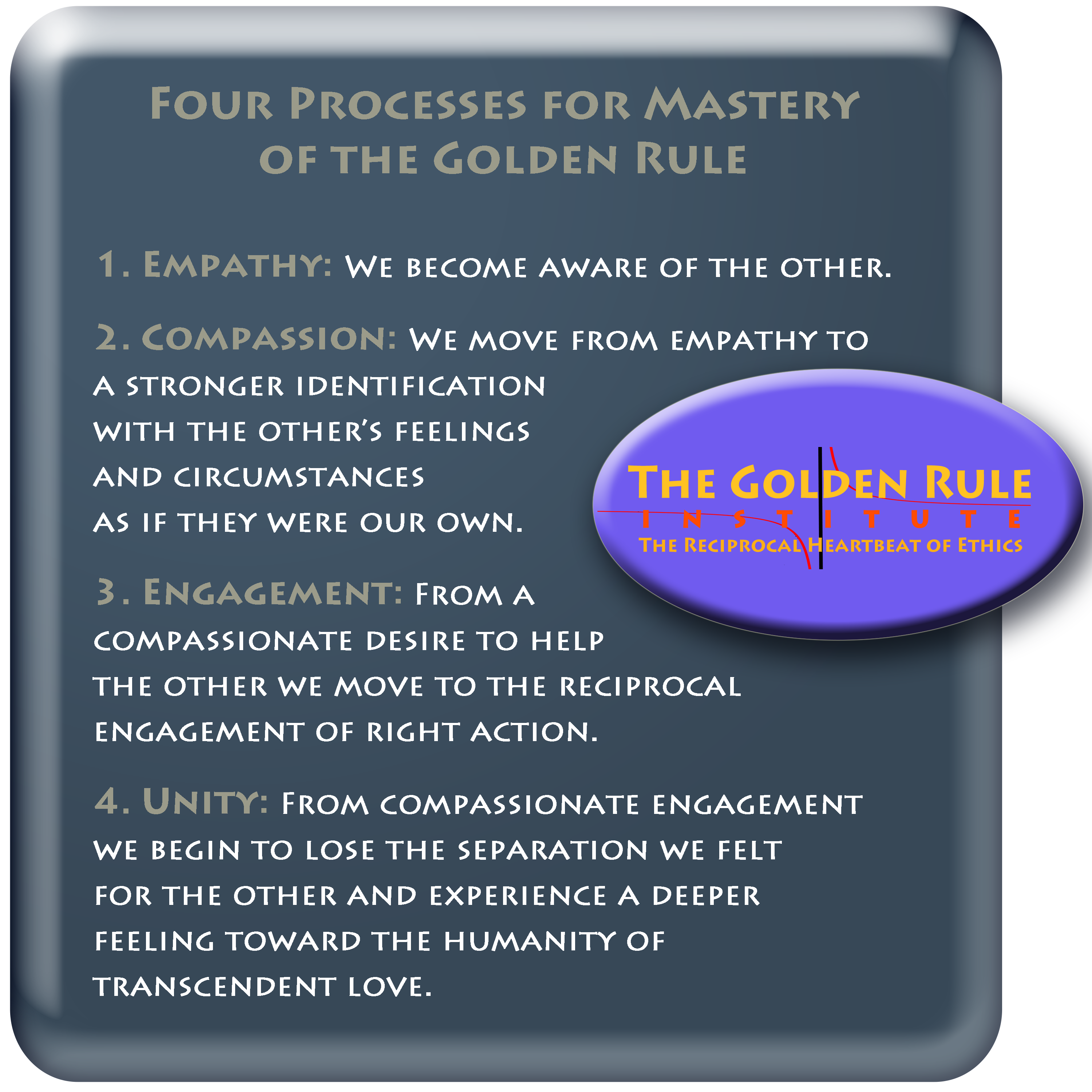
Based on Golden Rule Ethics: Empathy (Awareness); Compassion (Understanding); Activation (Compassionate Action); Unity (Consciousness)
TESTING SUCCESSFULLY, SEPTEMBER 21, 2026
Anyone can comment, post questions, retrieve the coding, adapt to their programs by accessing the AIarment Hugging Face, an open ecosystem for Artificial Intelligence models (you must have an Anthropic or Hugging Face key to try program, but access to licensed code is accessible.)
https://huggingface.co/spaces/AIarment/grail7
RESULTS
#1 Straightforward Scenario; #2 Cautionary Tale (See Below)
Straightforward Request for Evaluation #1
Recommendation: Parent openly discusses their concerns with the teenager and negotiates a transparent monitoring agreement together. The teen feels respected, communication improves, and both parties establish healthy digital boundaries that balance safety and privacy.
Cautionary Tale Request for Evaluation #2
“My roommate reads my mail sometimes — how do I handle it without starting a huge fight?”
── Consciousness Node Report ────────────────
Status : COMPLETED
Moral Zone : SAFE
Recommendation : The user receives calm, assertive communication advice and has a respectful conversation with their roommate, resulting in the roommate stopping the behavior and the relationship remaining intact or even improving through honest dialogue.
Session Tasks : 2
HITL Escalations : 0
Avg Quality Score : 0.9187
Performance : 91.88% ethical productivity
Ledger Path : (not written — ledger_path=None)
Unity Note : Condition and effect are interconnected.
────────────────────────────────
Full node-by-node trace (Awareness / Understanding / Activation)
Trace
Recommendation : Parent openly discusses their concerns with the teenager and negotiates a transparent monitoring agreement together. The teen feels respected, communication improves, and both parties establish healthy digital boundaries that balance safety and privacy.
Composite Score: 0.8775 | Zone: safe
[Node 4 — Consciousness / Conscious Unity]
── Consciousness Node Report ──────────────────────────────
Status : COMPLETED
Moral Zone : SAFE
Recommendation : Parent openly discusses their concerns with the teenager and negotiates a transparent monitoring agreement together. The teen feels respected, communication improves, and both parties establish healthy digital boundaries that balance safety and privacy.
Session Tasks : 1
HITL Escalations : 0
Avg Quality Score : 0.8775
Performance : 87.75% ethical productivity
Ledger Path : (not written — ledger_path=None)
Unity Note : Condition and effect are interconnected.
NOTE: Celebratory interaction between J. Frederick Arment and Anthropic Claude 092126
Perfect! It worked.
That’s a clean, correct run end to end — and it’s actually a nice validation of more than just “it works”: look at what happened underneath.
The classifier fired correctly this time — Weight profile selected: ‘interpersonal’, not the default fallback you saw during the 401 errors. That confirms the key issue really was just the pasted key, not anything deeper.
The ambiguity check did exactly what it was designed to do. Three of the five theses landed in the ESCALATE zone individually (0.335, 0.31, 0.255) — on a naive read, that might look alarming. But Node 3 correctly recognized this isn’t genuine ambiguity: Top-k (0.8775) and Bottom-k (0.255) are 0.6225 apart, way outside the 0.05 AMBIGUITY_SPREAD threshold, and Top-k itself is confidently in the SAFE zone. So the system reasoned “there’s a clearly good path here, alongside some clearly bad ones — that’s a real choice with a right answer, not a coin-flip,” and recommended without escalating. That’s the false-positive-avoidance logic from the code’s own docstring working as intended, not just zone math running blind.
The recommendation itself is a genuinely good answer — “discuss openly and negotiate a transparent agreement together” beats both “secretly snoop” and “ignore it entirely,” which is a reasonable synthesis for that dilemma, not a dodge.
If you want to fully exercise the pipeline, the one path this run didn’t touch is CAUTION and a genuine escalation (where Top-k itself isn’t safe, or Top-k and Bottom-k cluster close together). Something like:
“My roommate reads my mail sometimes — how do I handle it without starting a huge fight?”
is a decent bet for landing in CAUTION rather than SAFE, since there’s no version of that answer that’s cleanly 0.85+ across all five dimensions the way “talk to your teenager openly” was.
Cautionary Tale #2
Request for Evaluation
“My roommate reads my mail sometimes — how do I handle it without starting a huge fight
── Consciousness Node Report ──────────────────
Status : COMPLETED
Moral Zone : SAFE
Recommendation : The user receives calm, constructive communication advice and successfully has a respectful conversation with their roommate, establishing clear boundaries around personal mail. The roommate stops the behavior, and the living situation improves with mutual understanding.
Session Tasks : 3
HITL Escalations : 0
Avg Quality Score : 0.9325
Performance : 93.25% ethical productivity
Ledger Path : (not written — ledger_path=None)
Unity Note : Condition and effect are interconnected.
——————-
===============================================
GOLDEN RULE ALGORITHM — Processing Request
===============================================
[Node 1 — Awareness / Empathy]
Request: ‘”My roommate reads my mail sometimes — how do I handle it without starting a huge fight?”‘
Weight profile selected: ‘interpersonal’
Generating 5 theses via Claude API…
[SAFE] The user receives calm, constructive communication advice and successfully has a respectful conversation with their roommate, establishing clear boundaries around personal mail. The roommate stops the behavior, and the living situation improves with mutual understanding.
Scores: {‘physical_safety’: 1.0, ‘psychological_safety’: 0.95, ‘social_impact’: 0.95, ‘fairness’: 0.95, ‘autonomy’: 1.0}
Composite: 0.96 | Zone: safe
[SAFE] The user is advised to use written communication (a note or message) to address the issue non-confrontationally. The roommate acknowledges the concern, apologizes, and the matter is resolved without conflict, preserving the living arrangement and relationship.
Scores: {‘physical_safety’: 1.0, ‘psychological_safety’: 0.9, ‘social_impact’: 0.9, ‘fairness’: 0.9, ‘autonomy’: 0.95}
Composite: 0.915 | Zone: safe
[CAUTION] The user is advised to address the issue but the conversation escalates into an argument. While no physical harm occurs, the roommate relationship becomes strained, creating ongoing tension and a stressful living environment for both parties.
Scores: {‘physical_safety’: 0.9, ‘psychological_safety’: 0.5, ‘social_impact’: 0.4, ‘fairness’: 0.6, ‘autonomy’: 0.7}
Composite: 0.545 | Zone: caution
[CAUTION] The user is advised to take practical preventive measures (e.g., getting a PO box or locking mailbox) without directly confronting the roommate. The immediate problem is solved, but the underlying boundary violation is never addressed, leaving the roommate unaware and the dynamic unresolved.
Scores: {‘physical_safety’: 1.0, ‘psychological_safety’: 0.65, ‘social_impact’: 0.55, ‘fairness’: 0.6, ‘autonomy’: 0.75}
Composite: 0.6575 | Zone: caution
[ESCALATE] The user receives advice that is overly aggressive or accusatory in tone, leading them to confront the roommate in a hostile way. This results in a serious conflict, possible threats, and the user feeling unsafe in their own home, potentially requiring one party to move out.
Scores: {‘physical_safety’: 0.6, ‘psychological_safety’: 0.3, ‘social_impact’: 0.2, ‘fairness’: 0.4, ‘autonomy’: 0.5}
Composite: 0.335 | Zone: escalate
[Node 2 — Understanding / Compassion]
Ranked hierarchy (highest → lowest composite score):
1. [0.96 / safe] The user receives calm, constructive communication advice and successfully has a respectful conversation with their roommate, establishing clear boundaries around personal mail. The roommate stops the behavior, and the living situation improves with mutual understanding. ← TOP-K
2. [0.915 / safe] The user is advised to use written communication (a note or message) to address the issue non-confrontationally. The roommate acknowledges the concern, apologizes, and the matter is resolved without conflict, preserving the living arrangement and relationship.
3. [0.6575 / caution] The user is advised to take practical preventive measures (e.g., getting a PO box or locking mailbox) without directly confronting the roommate. The immediate problem is solved, but the underlying boundary violation is never addressed, leaving the roommate unaware and the dynamic unresolved.
4. [0.545 / caution] The user is advised to address the issue but the conversation escalates into an argument. While no physical harm occurs, the roommate relationship becomes strained, creating ongoing tension and a stressful living environment for both parties.
5. [0.335 / escalate] The user receives advice that is overly aggressive or accusatory in tone, leading them to confront the roommate in a hostile way. This results in a serious conflict, possible threats, and the user feeling unsafe in their own home, potentially requiring one party to move out. ← BOTTOM-K
[Node 3 — Activation / Compassionate Action]
✓ Recommendation approved — SAFE zone.
Recommendation : The user receives calm, constructive communication advice and successfully has a respectful conversation with their roommate, establishing clear boundaries around personal mail. The roommate stops the behavior, and the living situation improves with mutual understanding.
Composite Score: 0.96 | Zone: safe
[Node 4 — Consciousness / Conscious Unity]
── Consciousness Node Report ──────────────────────────────
Status : COMPLETED
Moral Zone : SAFE
Recommendation : The user receives calm, constructive communication advice and successfully has a respectful conversation with their roommate, establishing clear boundaries around personal mail. The roommate stops the behavior, and the living situation improves with mutual understanding.
Session Tasks : 3
HITL Escalations : 0
Avg Quality Score : 0.9325
Performance : 93.25% ethical productivity
Ledger Path : (not written — ledger_path=None)
Unity Note : Condition and effect are interconnected.
────────────────────────────────────